The AI Builder
Companies are going to need people who can build AI systems from scratch. Here's why the AI Builder role is about to go mainstream — and why it's more than just a technical position.
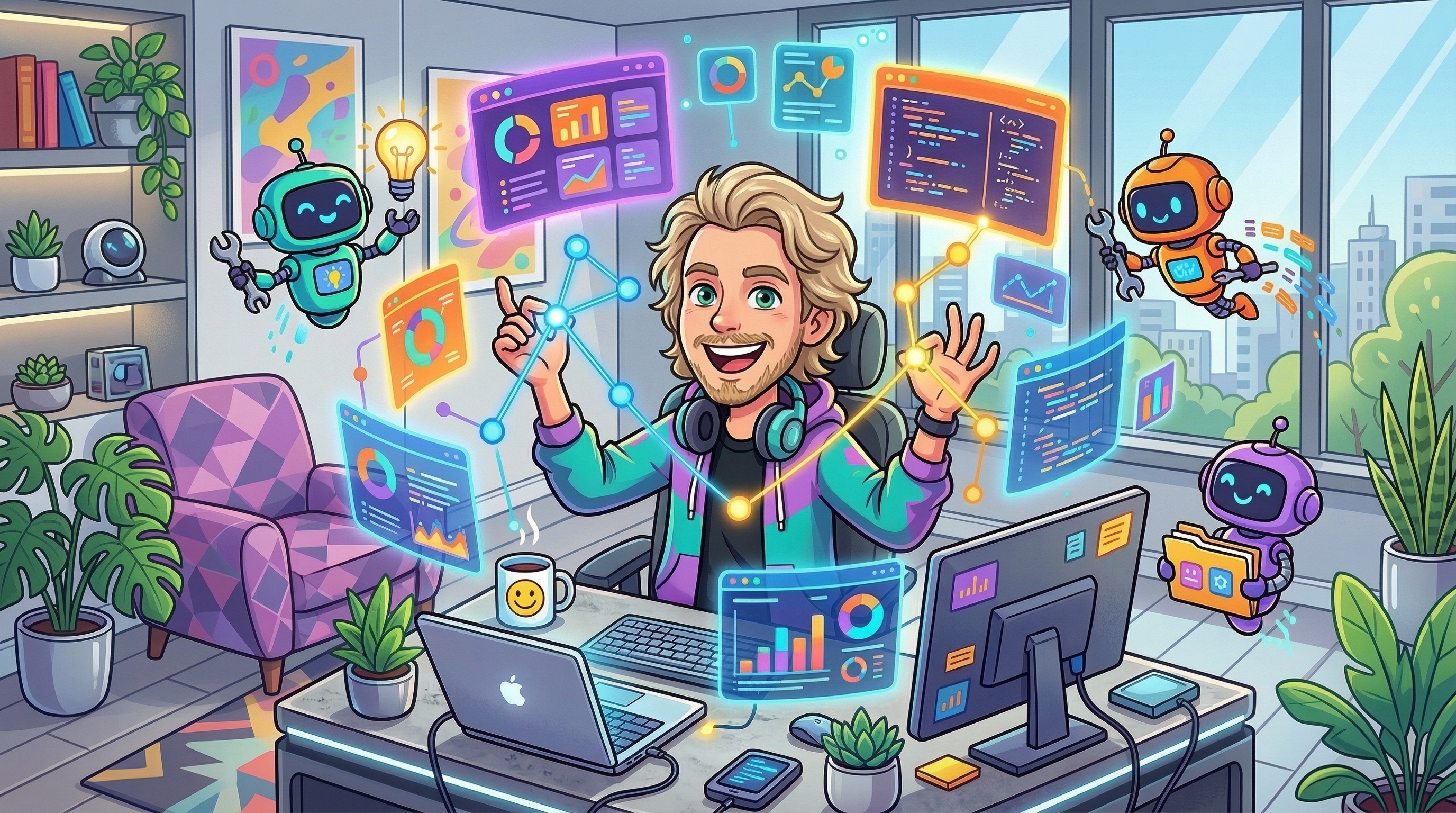
I've been thinking a lot lately about where work is heading, not in some distant, sci-fi way, but in the next few years. And I keep coming back to this idea: companies are going to need people who can build AI systems from scratch, not just use off-the-shelf tools. Call it an AI Builder. An Orchestrator. Whatever. It's an emerging role, one I've started to see some high-end tech companies hire for. But I believe we're about to see a global shift where everyday companies across all industries recognise the value and bring this role in-house.
More than replacing jobs
Here's the thing: AI isn't just about replacing jobs (though yeah, that's happening too). It's about freeing people up. When you automate the boring, repetitive stuff — the data entry, the manual reporting, the admin tasks that eat up half your day — you give people their brain space back. And that's where the real magic happens. Creativity. Problem-solving. The bigger-picture ideas that actually move things forward.
I've seen this firsthand. At work, I've built dashboards using Claude that help me and my colleagues analyse data way faster than we could before. I use it for rostering, formal correspondence, spotting trends — stuff that used to take hours now takes minutes. And that's just scratching the surface.
The harder part
But here's what I've noticed: not everyone gets it yet. Some people don't trust AI. Others can't see how it applies to their workflow. And honestly? That's fair. The real shift isn't just "do the same thing faster." It's "what becomes possible that you didn't even know was an option?" And helping people see that — and get comfortable with change — is incredibly hard.
That's why I think the AI Builder role is going to be so valuable. It's not just technical. It's about understanding how teams actually work, identifying where AI can help, building the tools, and then teaching people how to use them. It's a full adoption strategy — creative problem-solving meets hands-on building meets people skills.
What I've been building
In the last few weeks alone, I've rebuilt my portfolio website three or four times. I've built basic MVPs for three different products. I've expanded my knowledge into areas I never thought I'd touch. The pace of what's possible now is absurd. And yeah, my sleep schedule has taken a hit (turns out the AI doesn't need rest, but I probably do). But that's the opportunity.
The ability to rapidly prototype, customise, and deploy systems that actually help people do better work? That's not a nice-to-have anymore. It's the future. And I want to be one of the people building it.